
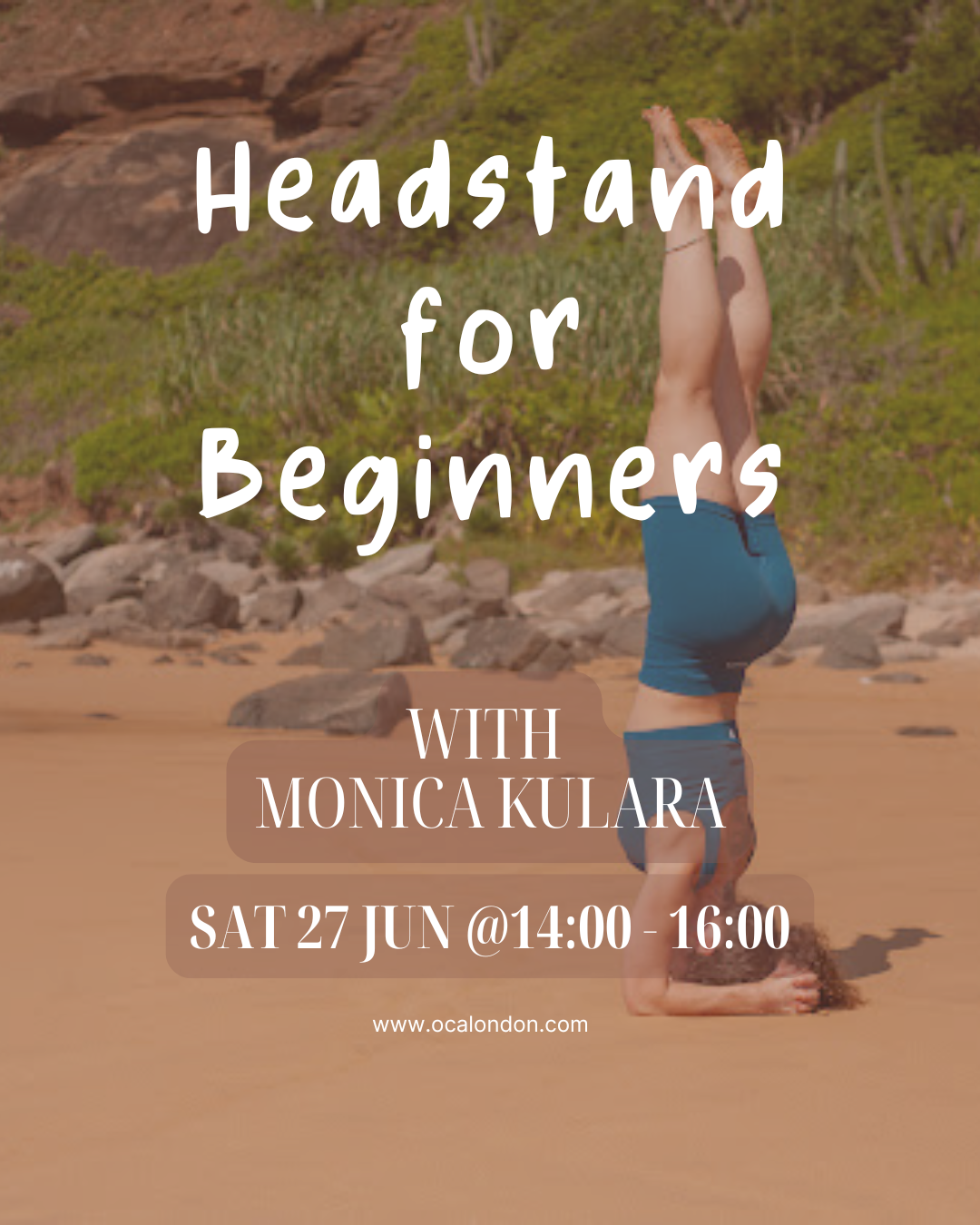
Anyone can learn to do a headstand with patience, focus and consistent practice.
Headstand (Sirsasana) is one of my favourite yoga postures because it is both empowering and humbling at the same time.
What to Expect
In this workshop, you will cultivate strength, balance and confidence while learning the mechanics of two variations of headstand. You’ll be guided safely and progressively into the pose at your own pace through a clear, step-by-step approach designed to help you feel supported throughout the session.
You will learn techniques to help you access headstand when your body is ready — whether using a wall, working with a partner or practicing independently. The focus will be on controlled movement, awareness and building a strong foundation.
We will begin with a short meditation to quiet the mind and focus our attention, followed by a strengthening practice targeting the shoulders, upper body and core to prepare the body for inversion work. We will then break down the pose in detail, with plenty of time to explore and practice.
By the end of the workshop, you will leave with:
A clear understanding of how to safely enter and exit headstand
Preparatory drills and strengthening techniques
Tools to overcome fear and build confidence
Greater body awareness and trust in your own practice
Who Is It For?
This workshop is suitable for anyone with an existing yoga practice. It is not recommended for complete beginners.
Benefits of Headstand
Headstand can help to:
Relieve stress
Improve focus and concentration
Calm the mind
Support healthy circulation
Strengthen the shoulders, arms, and core
Boost confidence and resilience
Increase blood flow to the head, eyes, and scalp
It is also a deeply humbling posture that teaches patience, consistency and determination. By reversing the usual effects of gravity, headstand can offer a sense of lightness and restfulness for the heart and nervous system.
Precautions & Contraindications
Headstand should be avoided if you:
Have high or low blood pressure
Are currently experiencing neck or back pain
Have glaucoma
Are pregnant, unless you had an established and steady headstand practice before pregnancy
Diving Deeper
In the Hatha Yoga tradition, inversions were originally referred to as Vipareeta Karani Mudra — “the reversing attitude” — before they became widely known as asanas.
From the Hatha Yoga Pradipika (Chapter 3, Verse 78):
“Above the navel and below the palate respectively are the Surya (sun) and the Chandra (moon)...”
We will also briefly explore the meaning and symbolism behind this teaching for those interested in the philosophical roots of the practice.
I’m looking forward to sharing this practice and connecting with you.
If you have any questions, please feel free to get in touch.
With love and respect
Monica